1
Translate the Decision into a Work Plan
Define the result, scope, deliverables, acceptance criteria, dependencies, timeline, resources, and required controls.
Systems thinker. Quality focused. People oriented.
I am drawn to work that requires me to notice patterns, ask better questions, and learn the system before changing it. I use research, critical thinking, clear constraints, and careful documentation to move from unclear information to a practical result.
Texas Triangle, HTX adjacent Open to remote opportunities and paid relocation
How I Work
Once the intended result and governing constraints are clear, I translate them into a visible operating plan. I define the inputs, owners, handoffs, standards, checkpoints, exception paths, and final deliverables; then I perform or coordinate the work, verify the output, communicate what changed, and record what the next person needs.
Define the result, scope, deliverables, acceptance criteria, dependencies, timeline, resources, and required controls.
Identify what must be provided, who owns each stage, what makes the work ready to move, and what the next person or system needs.
Use the appropriate rules, procedures, and tools while keeping the governing requirement and required human decisions visible.
Check the result against the source, standard, acceptance criteria, downstream use, and the edge cases most likely to expose a failure.
Provide the output, context, unresolved issues, decision history, and next action needed for the recipient to continue the work.
Compare the result with the baseline, record the workflow and known issues, and improve the next cycle without hiding judgment.
What I Do Best
Selected Experiences
Selected Results
Languages supported in one high-volume clinical-trial project
Legacy records extracted for review and recovery
Workflow steps reduced through automation and redesign
Approximate reduction in manual effort
Case Study Preview
Each case study explains the issue, breakdown, goal, actions, outcome, and what I applied later.
View all case studies
A proprietary character-count feature introduced hidden-counting errors and workflow risk. The project returned to an auditable process with clearer roles, accurate counts, and controlled review.
Read the case study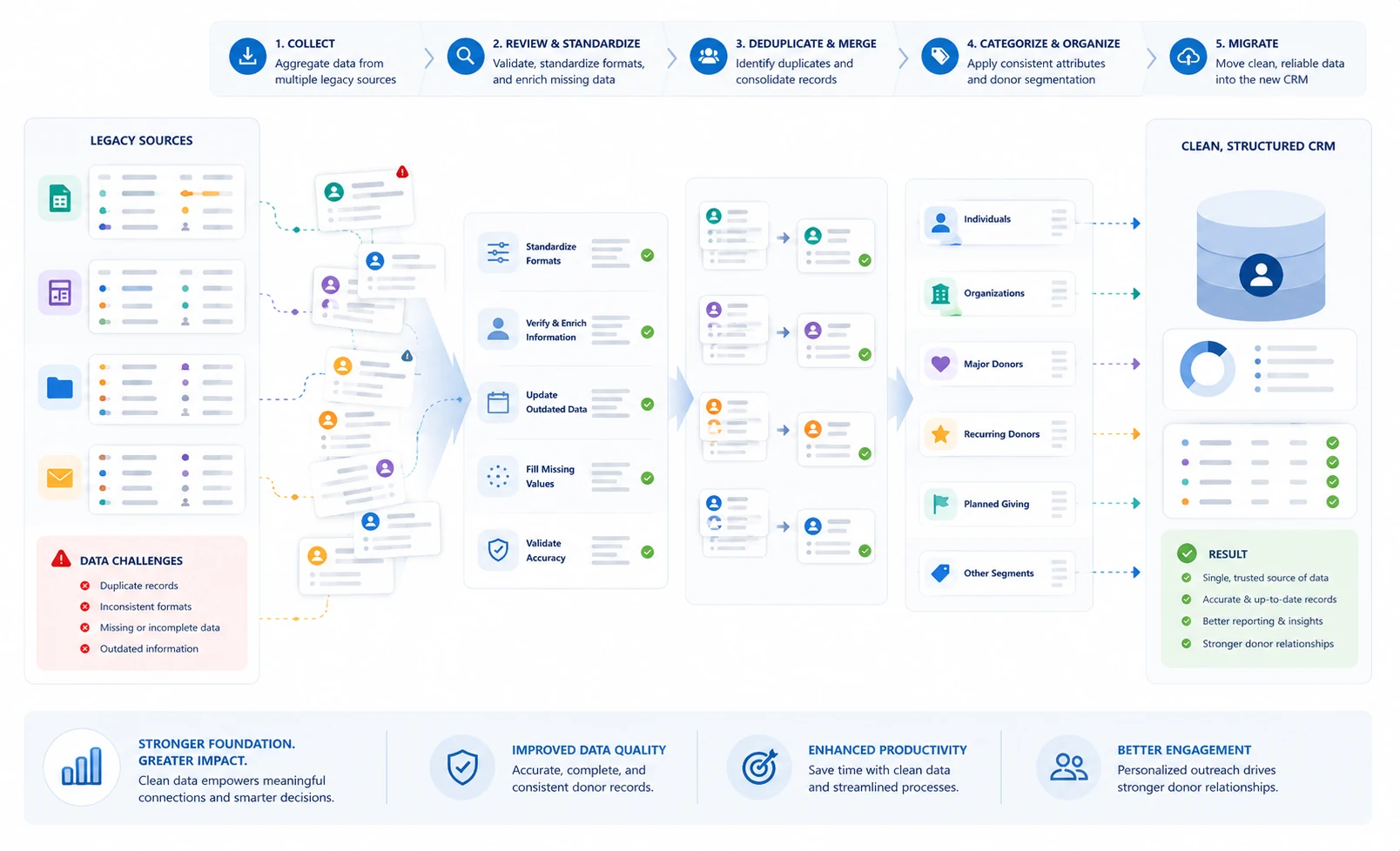
Unsupported software, duplicates, missing fields, and outdated categories were converted into a structured, validated donor dataset ready for re-engagement.
Read the case studyHow I Think
I begin by defining the decision or result that is actually needed, the facts that can be supported, and the constraints that shape the available options. I separate verified information from assumptions, symptoms from root causes, and recurring patterns from exceptions before comparing possible responses.
State what must be decided, improved, or clarified, the intended result, and who will use the answer.
Separate supported information from assumptions and identify the standards, deadlines, risks, costs, tools, and other limits.
Look for what repeats, what does not fit, what is missing, and what is producing the visible problem.
Compare possible responses against the evidence, governing standard, risk, timing, downstream effects, and people affected.
Select the response that is justified under current conditions and explain the evidence, limits, and next action directly.
Preserve the reasoning, assumptions, and conditions that would require the decision to change later.
Recruiter FAQ
Roles involving systems and process improvement, data quality, QA, documentation, knowledge management, workflow automation, CRM or records coordination, and process-focused operations.
I am curious, reliable, direct, and comfortable learning the system behind the task. I can maintain consistent output while still noticing patterns, constraints, and recurring problems that may need a better solution.
I work best where priorities and ownership are clear, standards are useful, and people communicate directly. I value enough structure to produce consistent work and enough trust to investigate problems instead of working around them forever.
I define the decision, separate facts from assumptions, identify the constraints and consequences, and ask direct questions when the evidence is incomplete. I document the answer so the same issue does not have to be solved from scratch.
Out of the Office
I tend to notice what others overlook, when a category is unclear, when data does not match, when a process has too many exceptions, or when documentation needs to be clearer for the next person.
Outside of work, I am drawn to languages, travel, gardening, writing, practical systems, and internet culture.
Read more about meBest-Fit Roles
I am open to full-time, contract, and project-based opportunities.